
Calcium- Sources, functions, homeostasis and clinical significance
[slideshare id=37323114&doc=calcium-functionsandsignificance-140724094015-phpapp01]
Calcium- Sources, functions, homeostasis and clinical significance Read More »
[slideshare id=37323114&doc=calcium-functionsandsignificance-140724094015-phpapp01]
Calcium- Sources, functions, homeostasis and clinical significance Read More »
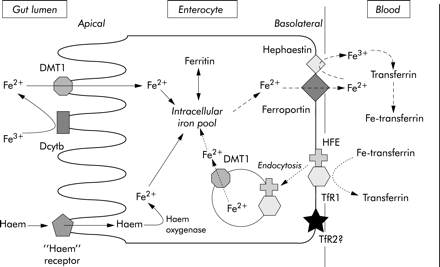
Iron absorption takes place largely in the proximal small intestine and is a carefully regulated process. In general, there is no regulation of the amounts of nutrients absorbed from the gastrointestinal tract. A notable exception is an iron, the reason that absorption must be carefully regulated is that the body does not possess a physiological
Mechanism of Iron absorption Read More »
Case Details A 35 year -old female reported to emergency with severe pain in the left flank region, which was radiating towards the lower leg and back. The patient was in acute distress and agony. History revealed that she frequently suffered from urinary tract infections and had several such episodes of pain. She further reported
Case study- Hypercalcemia Read More »
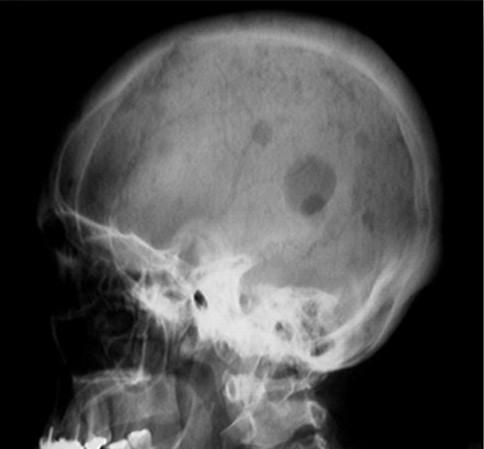
A 48-year-old man presents with a short history of severe low backache, loss of weight and diminished appetite. X-Ray skull shows punched out lesions. Serum electrophoresis reveals an abnormal band between the β globulin and the γ globulin region. What is the probable diagnosis? Please check the answer at: Image challenge-1- Answer
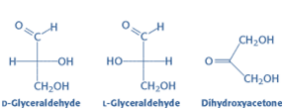
Q.1- Discuss in brief about the isomerism in monosaccharides.Answer- The sugar molecules having asymmetric carbon atoms exhibit isomerism. Asymmetric carbon atom- It is the carbon atom that is attached to four different groups. All monosaccharides except- Dihydroxyacetone, have asymmetric carbon atoms. Based on the presence of asymmetric carbon atoms the following types of isomerism of monosaccharides are
Important Questions of Monosaccharides (Solved)(Set-1) Read More »
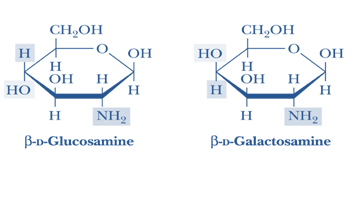
Introduction The most abundant heteropolysaccharides in the body. Highly negatively charged molecules, with extended conformation that imparts high viscosity to the solution. GAGs are located primarily on the surface of cells or in the extracellular matrix (ECM). Along with the high viscosity of GAGs comes low compressibility, which makes these molecules ideal for a lubricating
Glycosaminoglycans and proteoglycans – A quick revision Read More »
Monosaccharides from S.S.R.Medical College, Mauritius
Monosaccharides-Chemistry and functions Read More »
Polysaccharides from S.S.R.Medical College, Mauritius
Chemistry and Significance of Polysaccharides Read More »
Oligosaccharides from S.S.R.Medical College, Mauritius
Chemistry and significance of disaccharides and oligosaccharides Read More »
Qualitative tests for carbohydrates from S.S.R.Medical College, Mauritius
Qualitative tests for carbohydrates – Methods and significance Read More »