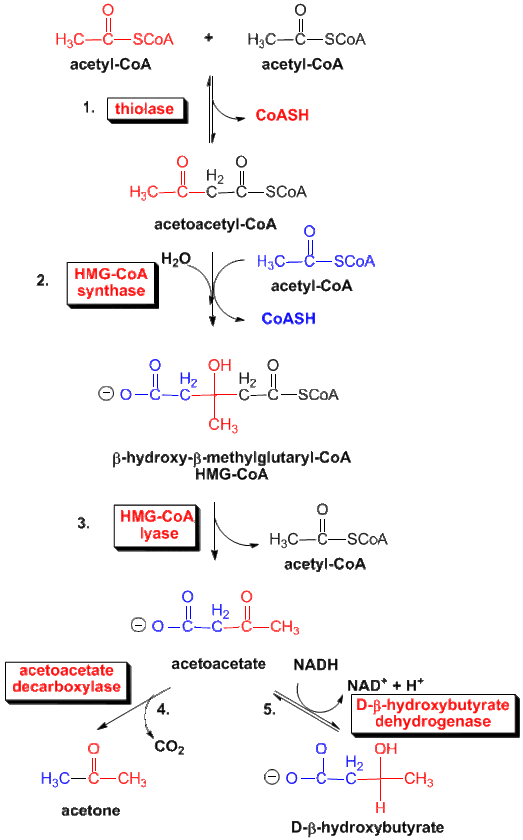
Acetoacetate.

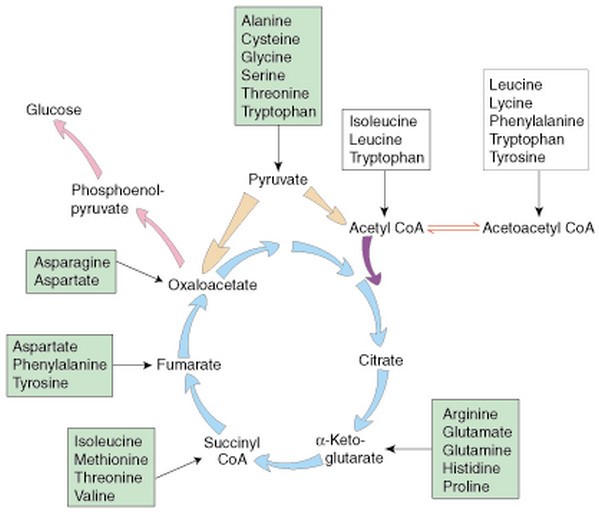
Starvation induced metabolic alterations

 A 23 –year- old female was brought for consultation by her mother, who was troubled by her daughter’s continuous fatigue, dizziness, and loss of weight. The patient was 6 feet 2 inches tall and weighed 100 pounds. Further questioning revealed that the young woman had been virtually fasting for four months, hoping to obtain a […]

Starvation induced metabolic alterations Read More »
Utilization of ketone bodies and ketosis- lecture 3

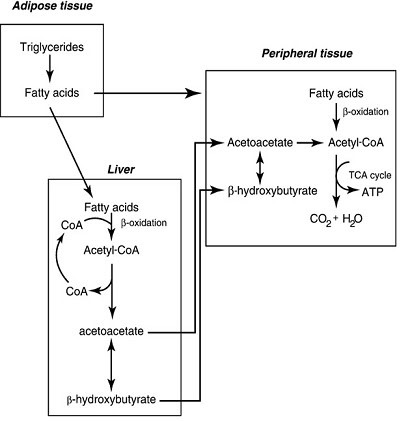
Utilization of ketone bodies The ketone bodies are water-soluble and are transported across the inner mitochondrial membrane as well as across the blood-brain barrier and cell membranes. Thus, they can be used as a fuel source by a variety of tissues, including the CNS. They are preferred substrates for aerobic muscle and heart, thus sparing

Utilization of ketone bodies and ketosis- lecture 3 Read More »

Ketogenesis-lecture 2

Ketogenesis Ketogenesis takes place in the liver using Acetyl CoA as a substrate or a precursor molecule. Enzymes responsible for ketone body formation are associated mainly with the mitochondria. Steps of synthesis-Acetoacetate (the first ketone body) is formed from acetyl CoA in three steps (figure ). 1)Two molecules of acetyl CoA condense to form Acetoacetyl

Ketogenesis-lecture 2 Read More »

Ketone bodies and their biological significance- lecture 1

Ketone bodies Ketone bodies can be regarded as a water-soluble, transportable form of acetyl units. Fatty acids are released by adipose tissue and converted into acetyl units by the liver, which then exports them as ketone bodies. Acetoacetate, D(-3) -hydroxybutyrate (Beta-hydroxybutyrate), and acetone are often referred to as ketone bodies (figure-1). Figure-1- showing the structure

Ketone bodies and their biological significance- lecture 1 Read More »

×