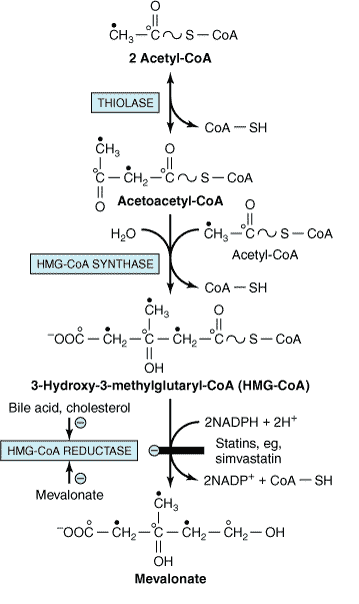
Thiolase.

Steps of de novo synthesis of cholesterol

Steps of de novo synthesis of cholesterol Cholesterol is derived from diet, de novo synthesis, and the hydrolysis of cholesteryl esters. A little more than half the cholesterol in the body arises by synthesis (about 700 mg/d), and the average diet provides the remainder. The liver and intestine account for approximately 10% each of the […]

Steps of de novo synthesis of cholesterol Read More »
Question of the week

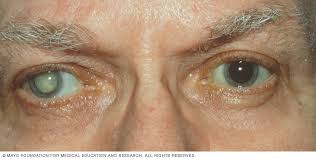
Case details A 54- year-old man with Type 1 diabetes is referred to an ophthalmologist for evaluation of developing cataracts. Blood chemistry results are shown below: Fasting blood glucose   198 mg/dl Hemoglobin A                  15 gm/dl Hemoglobin A1c             10% of total Hb Urine ketones                   Positive Urine glucose                    Positive Which of the following enzymes is most strongly

Question of the week Read More »

Utilization of ketone bodies and ketosis- lecture 3

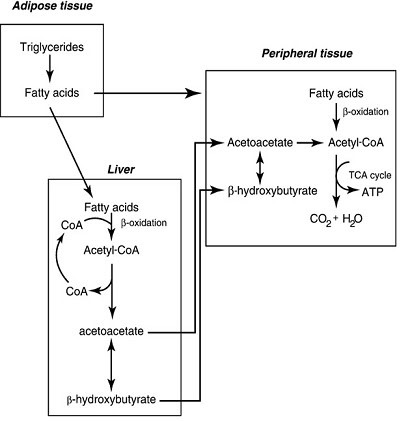
Utilization of ketone bodies The ketone bodies are water-soluble and are transported across the inner mitochondrial membrane as well as across the blood-brain barrier and cell membranes. Thus, they can be used as a fuel source by a variety of tissues, including the CNS. They are preferred substrates for aerobic muscle and heart, thus sparing

Utilization of ketone bodies and ketosis- lecture 3 Read More »

Ketogenesis-lecture 2

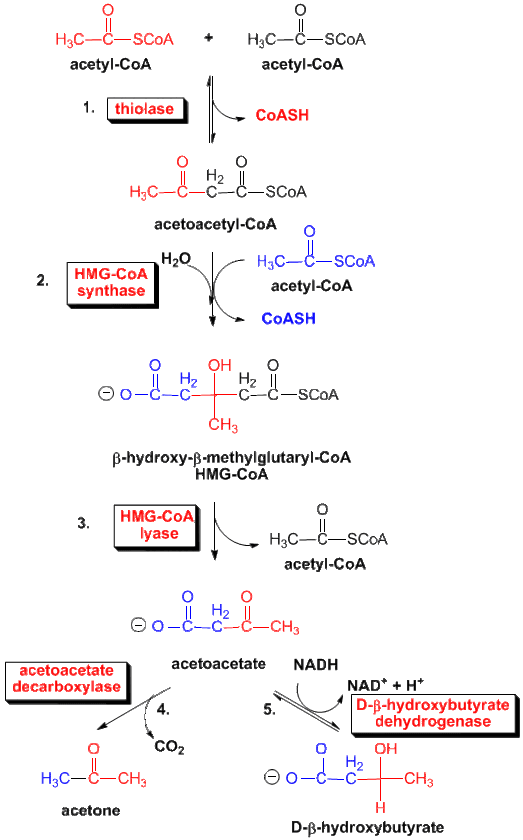
Ketogenesis Ketogenesis takes place in the liver using Acetyl CoA as a substrate or a precursor molecule. Enzymes responsible for ketone body formation are associated mainly with the mitochondria. Steps of synthesis-Acetoacetate (the first ketone body) is formed from acetyl CoA in three steps (figure ). 1)Two molecules of acetyl CoA condense to form Acetoacetyl

Ketogenesis-lecture 2 Read More »

Steps of beta-oxidation- Lecture-3

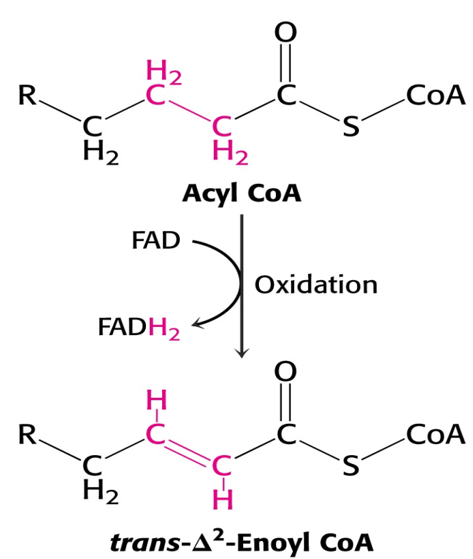
A saturated acyl Co-A is degraded by a recurring sequence of four reactions: 1) Oxidation (dehydrogenation) by flavin adenine dinucleotide (FAD) 2) Hydration, 3) Oxidation(dehydrogenation)  by NAD+, and 4) Thiolysis by CoA The fatty acyl chain is shortened by two carbon atoms as a result of these reactions, and FADH2, NADH, and acetyl CoA are

Steps of beta-oxidation- Lecture-3 Read More »

×