Iron deficiency anemia-a case study

Case Details An 18 –year- old female reported to the physician for consultation. She complained of generalized weakness, lethargy, and inability to do the routine work from the previous few months. On further questioning, she revealed that she was having excessive bleeding during menstruation for the previous six months. She complained of breathlessness and palpitations […]

Iron deficiency anemia-a case study Read More »

Calcium Homeostasis

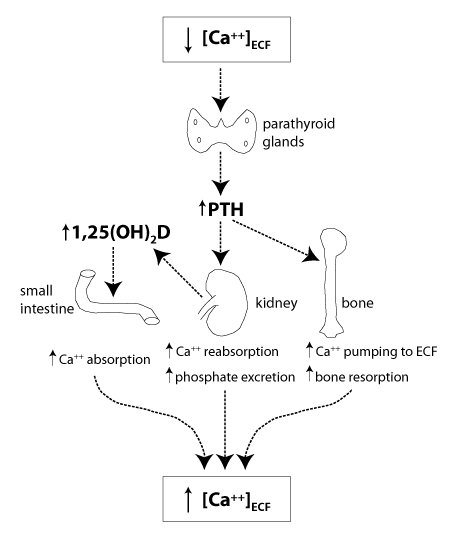
Calcium is required for the proper functioning of muscle contraction, nerve conduction, hormone release, and blood coagulation. In addition, calcium is required as a cofactor for various enzymes. Calcium balance Calcium is an important nutrient. The daily intake is approximately 1000 mg/day. The adult human body contains approximately 1100 g (27.5mol) of calcium. 99% of

Calcium Homeostasis Read More »

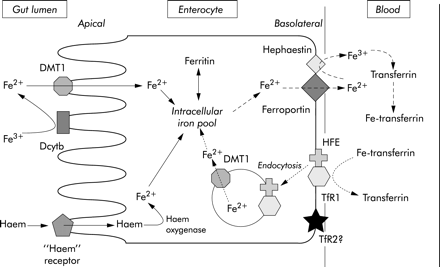
Mechanism of Iron absorption

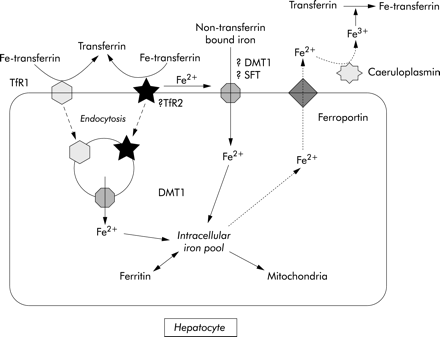
Iron absorption takes place largely in the proximal small intestine and is a carefully regulated process. In general, there is no regulation of the amounts of nutrients absorbed from the gastrointestinal tract. A notable exception is an iron, the reason that absorption must be carefully regulated is that the body does not possess a physiological

Mechanism of Iron absorption Read More »

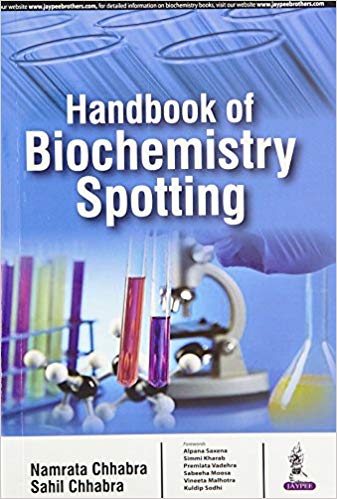
Handbook of Biochemistry Spotting

https://www.amazon.com/Handbook-Biochemistry-Spotting-Namrata-Chhabra/dp/9352501438 This book is founded on the concept of problem-based learning. The aim of this book is to get the students of Health and Medical Sciences aware of the basic biochemical principles and to practice these principles in analyzing commonly occurring health-associated problems in terms of their biochemical components. The text, although clinically relevant, is

Handbook of Biochemistry Spotting Read More »

A Case Oriented Approach Towards Biochemistry

https://www.amazon.com/Case-Oriented-Approach-Towards-Biochemistry/dp/9350901889/ref=sr_1_1?keywords=Case+Oriented+Approach+Towards+Biochemistry&qid=1582308149&sr=8-1 This book summarizes the essentials of Biochemistry with Clinical Correlations. The purpose of this book is to present a clear discussion of Biochemistry in relation to physiological processes occurring at the cellular levels and to cite examples of deviant biochemical processes in different clinical conditions. This book contains evaluations of clinical cases in sections,

A Case Oriented Approach Towards Biochemistry Read More »

Important Questions of Monosaccharides (Solved)(Set-1)

Q.1- Discuss in brief about the isomerism in monosaccharides.Answer- The sugar molecules having asymmetric carbon atoms exhibit isomerism. Asymmetric carbon atom- It is the carbon atom that is attached to four different groups. All monosaccharides except- Dihydroxyacetone, have asymmetric carbon atoms. Based on the presence of asymmetric carbon atoms the following types of isomerism of monosaccharides are

Important Questions of Monosaccharides (Solved)(Set-1) Read More »

×