Library

Acid-base balance-Lecture 3-(Role of lungs and kidney)

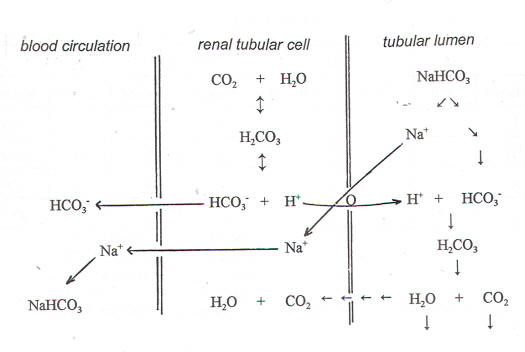
Normal Acid-Base Homeostasis and Role of Lungs Systemic arterial pH is maintained between 7.35 and 7.45 by extracellular and intracellular chemical buffering together with respiratory and renal regulatory mechanisms. The control of arterial CO2 tension (paCO2) by the central nervous system and respiratory systems and the control of the plasma bicarbonate by the kidneys stabilize […]

Acid-base balance-Lecture 3-(Role of lungs and kidney) Read More »

Acid- base balance- Lecture 2 (Role of blood buffers)

Buffers Buffers are weak acids or bases that are able to minimize changes in pH by taking up or releasing H+. Phosphate is an example of an effective buffer, as in the following reaction: HPO4 2- + (H+)  «H2 PO4 – Upon addition of an H+ to extracellular fluids, the monohydrogen phosphate binds H+ to

Acid- base balance- Lecture 2 (Role of blood buffers) Read More »

Fatty Acid Synthesis- Lecture-1 (Quick revision)

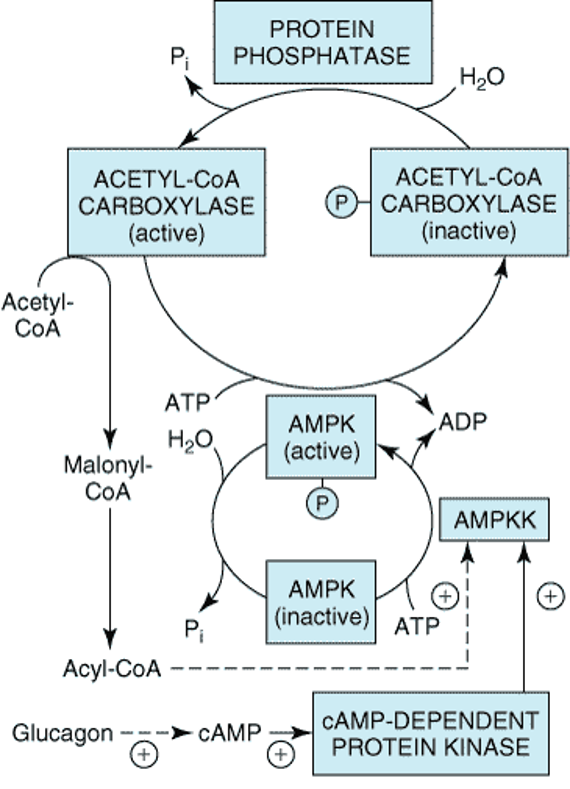
Sources of Fatty acids Diet Adipolysis de novo synthesis(from precursors)- Carbohydrates, protein, and other molecules obtained from the diet in excess of the body’s need can be converted to fatty acids, which are stored as triglycerides De novo Fatty Acid Synthesis Characteristics An extramitochondrial system synthesizes fatty acids This system is present in many tissues,

Fatty Acid Synthesis- Lecture-1 (Quick revision) Read More »

Transportation of Acetyl CoA

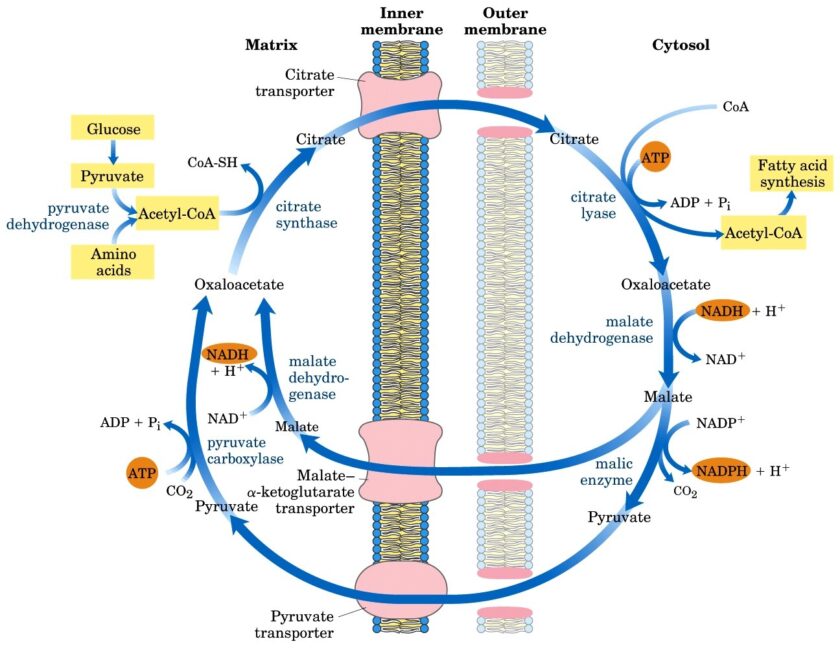
Fatty acids are synthesized in the cytosol, whereas acetyl CoA is formed from pyruvate in mitochondria. Hence, acetyl CoA must be transferred from mitochondria to the cytosol. Mitochondria, however, are not readily permeable to acetyl CoA. Carnitine carries only long-chain fatty acids. The barrier to acetyl CoA is bypassed by citrate, which carries acetyl groups

Transportation of Acetyl CoA Read More »

Fatty acid synthesis versus fatty acid oxidation

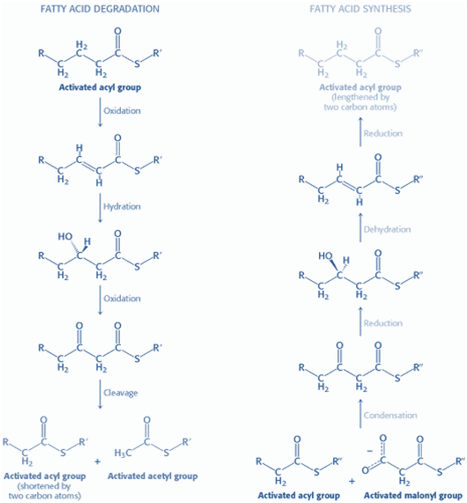
“Although chemical processes involved are the same, Fatty acid synthesis is not simply a reversal of fatty acid oxidation.”              Fatty acid synthesis seems simply a reversal of the degradative pathway, but it consists of a new set of reactions, exemplifying the principle that synthetic and degradative pathways are almost

Fatty acid synthesis versus fatty acid oxidation Read More »

Minor pathways of oxidation of fatty acids- Lecture-2 (omega and peroxisomal oxidation)

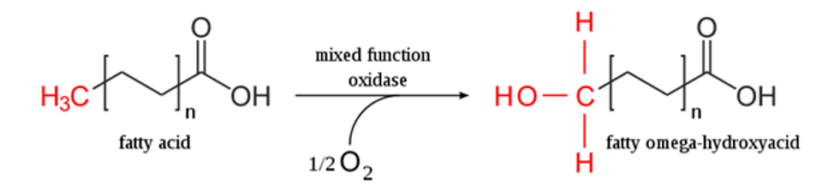
Omega oxidation of fatty acids Another minor pathway for fatty acid oxidation also involves hydroxylation and occurs in the endoplasmic reticulum of many tissues. In this case, hydroxylation takes place on the methyl carbon at the other end of the molecule from the carboxyl group or on the carbon next to the methyl end. It

Minor pathways of oxidation of fatty acids- Lecture-2 (omega and peroxisomal oxidation) Read More »

Minor pathways of oxidation of fatty acids- Lecture-1 (Alpha-oxidation)

The β oxidation accounts for the bulk of energy production from fatty acids in humans. These reactions must be supplemented by other mechanisms so that all types of ingested fatty acids can be oxidized. Overview of minor pathways of the biological importance of fatty acid oxidation 1) α- Oxidation- Oxidation occurs at C-2 instead of

Minor pathways of oxidation of fatty acids- Lecture-1 (Alpha-oxidation) Read More »

Elevated Acyl carnitine compounds and associated hypoglycemia- What is the defect?

Case details  A 5- year-old boy suffered gastroenteritis for two days and was brought to the emergency in a semiconscious state. Blood glucose at the time of admission was 45 mg/dl and his urine was negative for glucose and ketone bodies. Glucose was administered intravenously, and his condition improved within 10 minutes. Subsequent laboratory investigations

Elevated Acyl carnitine compounds and associated hypoglycemia- What is the defect? Read More »

Question the week-2 (Answer)

A 65-year-old man with a history of type 2 diabetes mellitus is complaining of blurred vision and numbness in his toes. Laboratory results are significant for an increased BUN and creatinine, indicative of renal failure, and high HbA1c, indicative of chronic persistent hyperglycemia. Of the several proposed mechanisms, one mechanism responsible for hyperglycemia-induced complications in

Question the week-2 (Answer) Read More »

×