Monosaccharides- Ring structures and Mutarotation

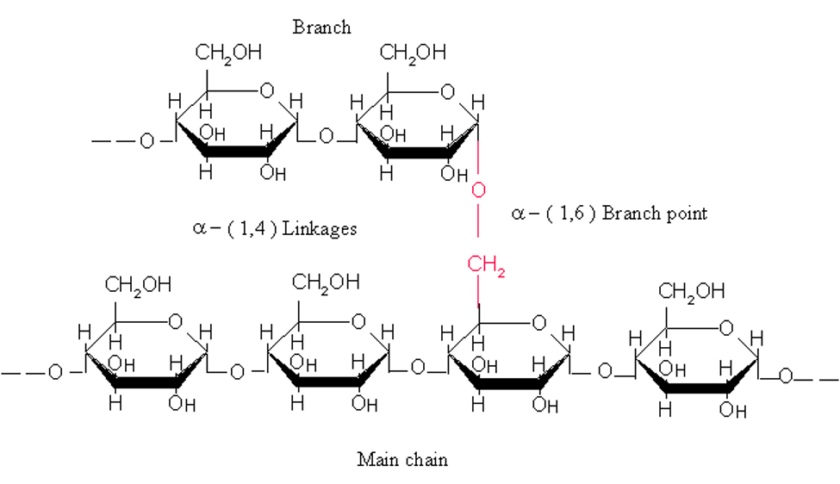
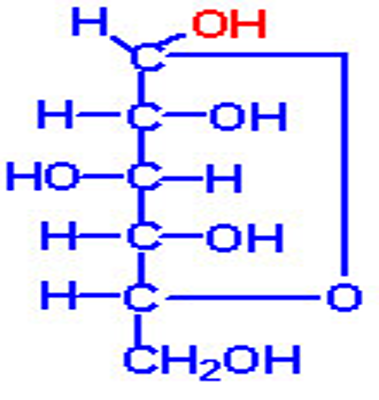
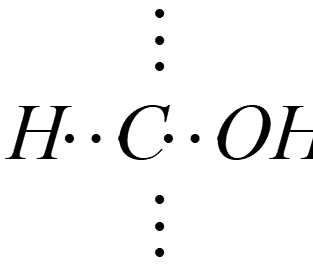
Representation of the ring structure of monosaccharides The ring structures of monosaccharides can be represented as follows : 1) Fischer projection The acyclic structure of a sugar is commonly shown by using a Fischer projection. A Fischer projection is sometimes used to illustrate the cyclic hemiacetal form of sugar. The presence of an aldehyde group and […]

Monosaccharides- Ring structures and Mutarotation Read More »

Isomerism in Monosaccharides

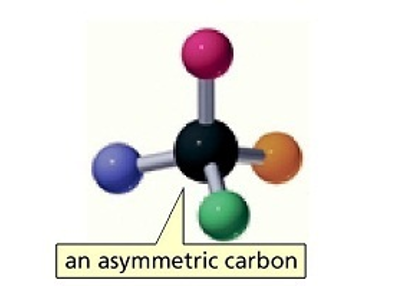
Isomerism in monosaccharides The monosaccharides having asymmetric carbon atoms exhibit isomerism. Asymmetric carbon atom- It is the carbon atom that is attached to four different groups (Figure-1) Figure-1- An asymmetric carbon atom with 4 different attachments All monosaccharides except- Dihydroxyacetone, have asymmetric carbon atoms (Figure-2) Figure-2- Glyceraldehyde has an asymmetric carbon atom whereas dihydroxyacetone lacks, thus

Isomerism in Monosaccharides Read More »

Chemistry of Carbohydrates- classification and significance

 General Introduction Carbohydrates are the most abundant compounds found in nature (cellulose: 100 billion tons annually) They make up most of the organic matter on earth because of their extensive roles in all forms of life. One of the four major classes of biomolecules along with proteins, nucleic acids, and lipids. The term carbohydrate is derived

Chemistry of Carbohydrates- classification and significance Read More »

Frequently asked long and short answer questions-cancers

1-Describe the role of tumor suppressor genes in human carcinogenesis. 2- List, giving an example for each, the ways by which proto-oncogenes can be converted to oncogenes. 3- Chromosomal translocations are the hallmark of certain human malignancies. What is known of the biochemical consequences of these cytogenic rearrangements and how these contribute to the development

Frequently asked long and short answer questions-cancers Read More »

Multiple-choice questions- Cancers

Q.1- Enzymes of which type are responsible for converting Pro carcinogens to Ultimate carcinogens? a) Cytochrome P 450 enzyme system b) Hydrolase c) Transferases d) Acetylases e) Polyamine oxidases Q.2- Which of the following is the most commonly mutated oncogene in cancer? a) p53 b) abl c) ras d) myc e) BRCA Q.3- A 23-year-old woman is

Multiple-choice questions- Cancers Read More »

Biochemistry of cancer cells- Lecture-1

“International Union Against cancer” has defined Cancer as a disturbance of growth, characterized by excessive proliferation of cells without apparent relation to the physiological demands of the organ involved. Properties of cancer cells Three important properties- 1) Diminished or unrestricted control of growth 2) The capability of invasion of local tissues 3) Capable of spreading

Biochemistry of cancer cells- Lecture-1 Read More »

Cancers- lecture-2 (tumor suppressor genes)

Cancer susceptibility genes There are two major classes of cancer susceptibility genes. A) Genes affecting cell growth- These genes exert their effects on tumor growth through their ability to control cell division (cell birth) or cell death (apoptosis).There are two types of genes affecting cell growth. Tumor suppressor genes– negatively affect cell growth. The normal

Cancers- lecture-2 (tumor suppressor genes) Read More »

Oncogenes- lecture-3

Oncogenes in Human Cancer Oncogenes are cancer susceptibility genes. Proto-oncogenes are normal genes that are present in normal cells and are involved in normal growth and development. Under certain circumstances due to the effect of certain processes protooncogenes are converted to Oncogenes. Significance of Proto-oncogenes In the normal cellular environment, proto-oncogenes have crucial roles in

Oncogenes- lecture-3 Read More »

Anticancer drugs- lecture- 4

Anticancer drugs The goal of cancer treatment is first to eradicate cancer. If this primary goal cannot be accomplished, the goal of cancer treatment shifts to palliation, the amelioration of symptoms, and preservation of quality of life while striving to extend life. Cancer treatments are divided into four main types: surgery, radiation therapy (including photodynamic

Anticancer drugs- lecture- 4 Read More »

×