Biochemistry

25 Case-Based MCQs on Cytoskeleton: Test Your Medical Knowledge!

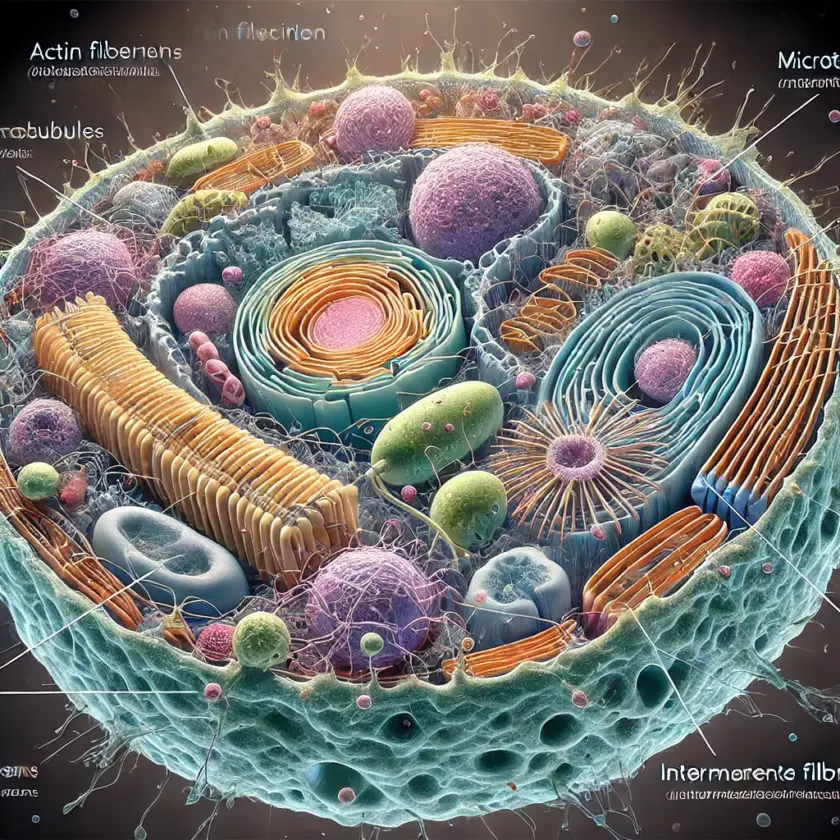
Ever wondered how the cytoskeleton supports cellular structure and movement? 🧬 Dive into 25 case-based multiple-choice questions that challenge your understanding of microtubules, actin filaments, intermediate filaments, and cytoskeletal disorders. Ideal for medical students, USMLE prep, and cell biology learners. Let’s test your knowledge!

25 Case-Based MCQs on Cytoskeleton: Test Your Medical Knowledge! Read More »

Biochemistry Challenge- Part 2

“Explore real-world applications of biochemistry through 21 engaging questions that connect metabolic pathways to clinical insights. Tackle scenarios like cyanide poisoning, enzyme regulation, metabolic disorders, and more. Sharpen your critical thinking as you dive into the intricacies of glycolysis, amino acid metabolism, and energy production. A must-read for anyone looking to bridge biochemistry with clinical practice!”

Biochemistry Challenge- Part 2 Read More »

Clinical Biochemistry Case Studies: Master Carbohydrate, Amino Acid Metabolism & Enzyme Dynamics

Through 25 hypothetical clinical cases and scenarios, this activity challenges learners to integrate concepts of carbohydrate metabolism, amino acid metabolism, oxidative phosphorylation, and enzyme dynamics. Participants will encounter questions highlighting real-world clinical relevance, such as the role of glycolytic intermediates, gluconeogenesis regulation, enzyme inhibition, and metabolic dysfunction in diseases like vitamin deficiencies and hyperammonemia. This engaging exploration enhances critical thinking and bridges biochemical theory with clinical practice.

Clinical Biochemistry Case Studies: Master Carbohydrate, Amino Acid Metabolism & Enzyme Dynamics Read More »

Explanations of Quiz on Nucleotide Metabolism

Enzymatic defects in purine and pyrimidine metabolism can present with diverse clinical features, including failure to thrive, megaloblastic anemia, hyperuricemia, or hyperammonemia. Key disorders include UMP synthase deficiency (orotic aciduria), OTC deficiency, ADA deficiency leading to SCID, and Lesch-Nyhan syndrome. Regulation through feedback inhibition and enzyme targets like ribonucleotide reductase are essential concepts for understanding metabolism and clinical interventions.

Explanations of Quiz on Nucleotide Metabolism Read More »

Comprehensive MCQs on Nucleotide Metabolism and Enzyme Deficiencies- A quiz for self-assessment

Dive into a series of multiple-choice questions focused on nucleotide metabolism and related enzyme deficiencies. This collection covers key topics such as UMP synthase deficiency, feedback inhibition mechanisms, purine and pyrimidine synthesis, and metabolic disorders affecting nucleotide pathways. Each question is accompanied by in-depth explanations to enhance your learning experience.

Comprehensive MCQs on Nucleotide Metabolism and Enzyme Deficiencies- A quiz for self-assessment Read More »

Biochemistry-Problem-based multiple choice questions

1)- Several complexes in the electron transport chain contain non-heme iron. The iron in these complexes is bound tightly to which of the following amino acids? a) Serine b) Tyrosine c) Cysteine d) Methionine e) Glutamine 2)- A 27 –year-old female with epilepsy has been taking Phenytoin to control her seizures. She is pregnant and

Biochemistry-Problem-based multiple choice questions Read More »

Summary- Regulation of Major Pathways Of Carbohydrate metabolism

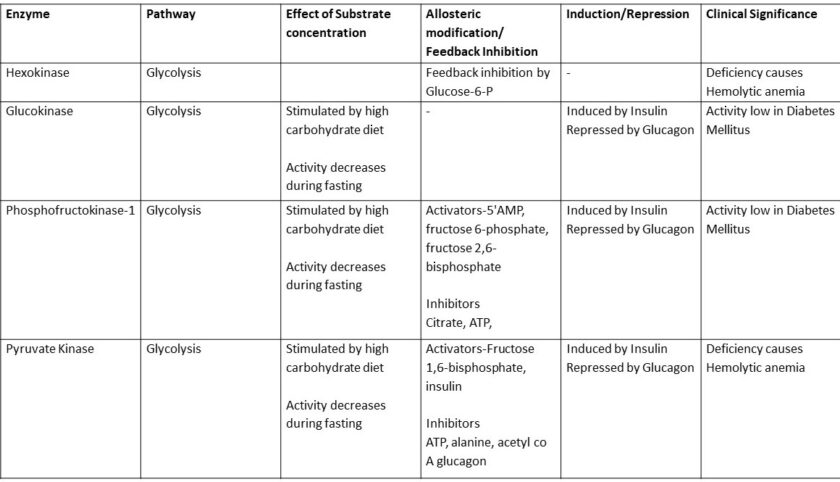
Enzyme Pathway Effect of Substrate Concentration Allosteric Modification/ Feedback Inhibition Induction/Repression Clinical Significance Hexokinase Glycolysis Feedback inhibition by Glucose-6-P – Deficiency causes Hemolytic anemia. Glucokinase Glycolysis Stimulated by a high carbohydrate diet   Activity decreases during fasting – Induced by Insulin Repressed by Glucagon Activity low in Diabetes Mellitus Phosphofructokinase-1 Glycolysis Stimulated by a high

Summary- Regulation of Major Pathways Of Carbohydrate metabolism Read More »

Regulatory Mechanisms- Lipid Metabolism (Summary Chart)

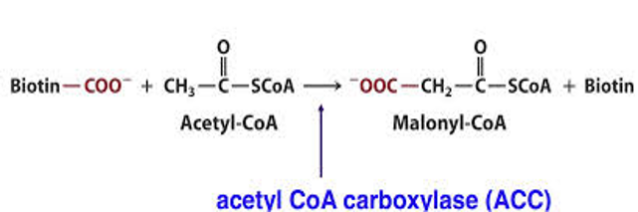
Enzyme Pathway Effect of substrate concentration Allosteric Modification/Feedback Inhibition Induction/ Repression Clinical Significance Acetyl CoA  Carboxylase Fatty acid synthesis Activity increases during well-fed state Activity decreases during fasting Activator- Citrate, ATP Acetyl CoA Insulin-by causing de-phosphorylation by stimulating protein phosphatase Inhibitors- Long-chain fatty acids, Epinephrine, Glucagon- via changes in phosphorylation state through c AMP mediated phosphorylation cascade Induced

Regulatory Mechanisms- Lipid Metabolism (Summary Chart) Read More »

×