Cholesterol

Biosynthesis of cholesterol- a quick revision

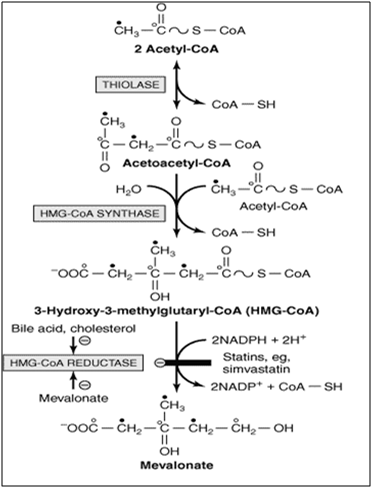
Biosynthesis of cholesterol The biosynthesis of cholesterol may be divided into five steps: (1) Synthesis of Mevalonate from acetyl-CoA. (2) Formation of Isoprenoid units from Mevalonate by loss of CO2. (3) Condensation of six isoprenoid units forms Squalene. (4) The cyclization of Squalene gives rise to the parent steroid, Lanosterol. (5)Formation of cholesterol from lanosterol. […]

Biosynthesis of cholesterol- a quick revision Read More »
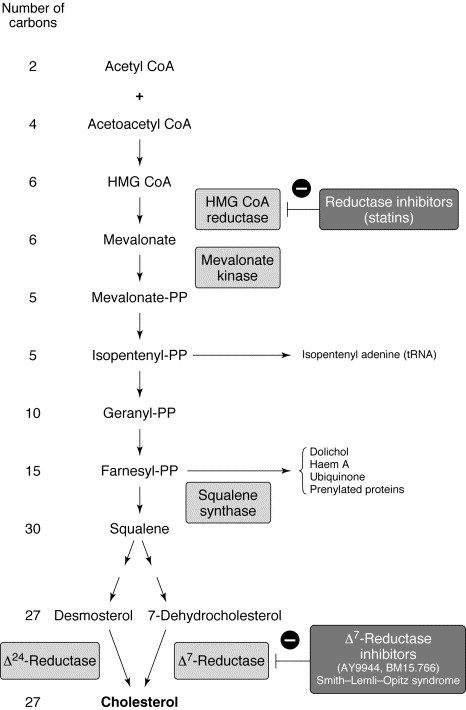
The reaction catalyzed by HMG Co-A Reductase

Case Details A 40-year-old man presents with chest pain that radiates to his left jaw and shoulder. He is diagnosed with a myocardial infarct (heart attack) and is prescribed statin medication. Statins are competitive inhibitors of HMG CoA reductase, which converts HMG Co A to which of the following? Isopentenyl pyrophosphate Mevalonate Geranyl pyrophosphate Farnesyl

The reaction catalyzed by HMG Co-A Reductase Read More »

Structure and functions of cholesterol

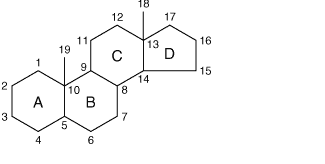
Structure and functions of cholesterol Cholesterol is the major sterol in the animal tissues. The structure of cholesterol consists of four fused rings (the rings in steroids are denoted by the letters A, B, C, and D), with the carbons numbered in the sequence, and an eight numbered, and branched hydrocarbon chain attached to the

Structure and functions of cholesterol Read More »

Digestion of lipids

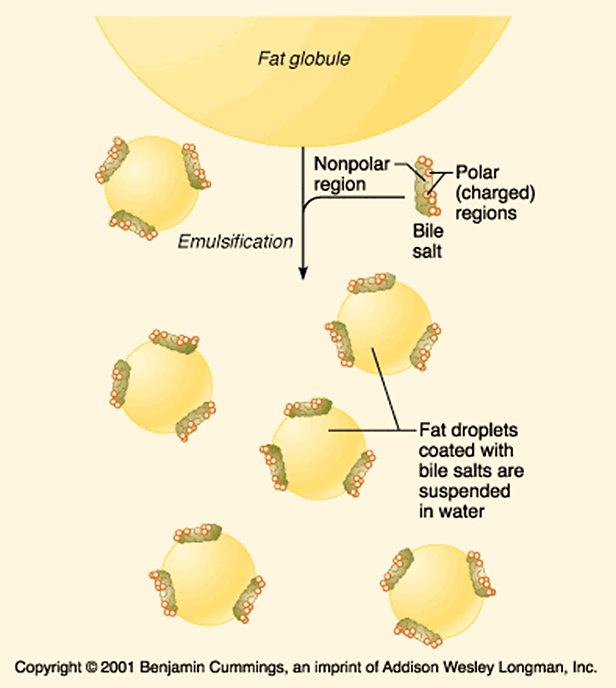
Introduction Lipids are a heterogeneous group of water-insoluble organic molecules that can be extracted from tissues by non-polar solvents. They are the major source of energy for the body. Dietary fat Composition More than 95% are triglycerides, the other are -Cholesteryl esters, phospholipids, and unesterified fatty acids. Dietary sources of Lipids a) Animal Sources Dairy

Digestion of lipids Read More »

Regulatory Mechanisms- Lipid Metabolism (Summary Chart)

Enzyme Pathway Effect of substrate concentration Allosteric Modification/Feedback Inhibition Induction/ Repression Clinical Significance Acetyl CoA  Carboxylase Fatty acid synthesis Activity increases during well-fed state Activity decreases during fasting Activator- Citrate, ATP Acetyl CoA Insulin-by causing de-phosphorylation by stimulating protein phosphatase Inhibitors- Long-chain fatty acids, Epinephrine, Glucagon- via changes in phosphorylation state through c AMP mediated phosphorylation cascade Induced

Regulatory Mechanisms- Lipid Metabolism (Summary Chart) Read More »

×