Beta oxidation of odd chain and unsaturated fatty acids- lecture-4

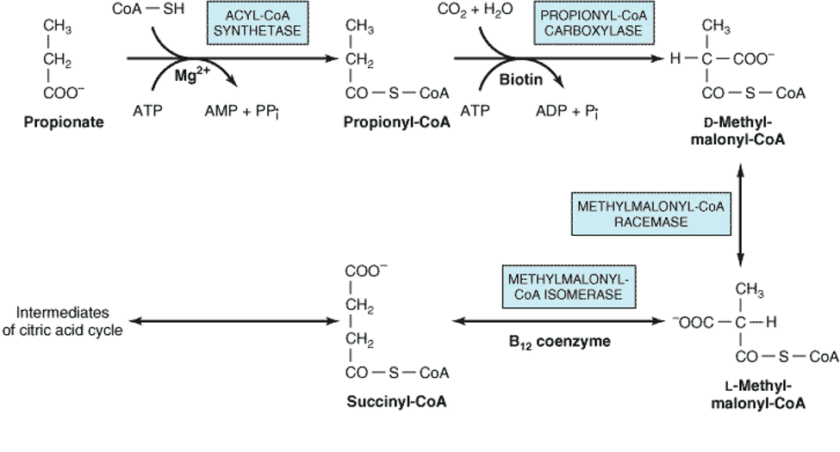
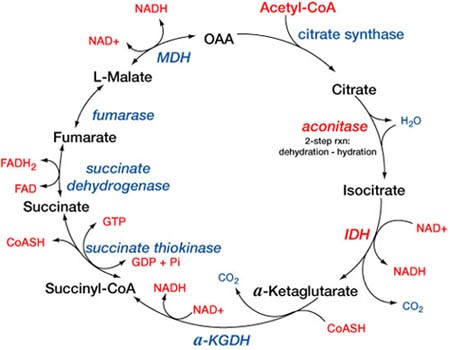
Fatty acids with an odd number of carbon atoms are oxidized by the pathway of β-oxidation, producing acetyl-CoA until a three-carbon (propionyl-CoA) residue remains. The 3- Carbon Propinyl CoA is utilized in the following way: The fate of propionyl CoA This compound is converted to succinyl-CoA, a constituent of the citric acid cycle (Figure 1). […]

Beta oxidation of odd chain and unsaturated fatty acids- lecture-4 Read More »

Beta oxidation of fatty acids-Lecture-2 (Activation and transportation of fatty acids)

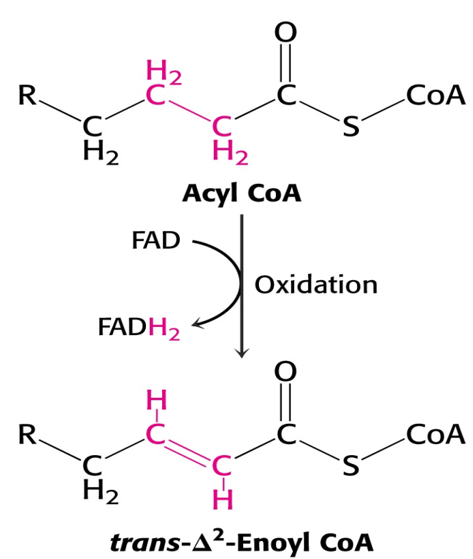
Overview β-oxidation takes place in mitochondrion. Tissues in which β-Oxidation is carried out are the liver, heart, kidney, muscle, brain, lungs, testes, and adipose tissue. In cardiac muscle, 80% of energy is derived from FA oxidation. A saturated acyl Co-A is degraded by a recurring sequence of four reactions: Oxidation by flavin adenine dinucleotide (FAD)

Beta oxidation of fatty acids-Lecture-2 (Activation and transportation of fatty acids) Read More »

Fatty acid oxidation- (General introduction)-Lecture-1   

A fatty acid contains a long hydrocarbon chain and a terminal carboxylate group. The hydrocarbon chain may be saturated (with no double bond) or maybe unsaturated (containing double bond)-figure-1. Figure 1- showing saturated and unsaturated fatty acids. Sources of fatty acids Fatty acids can be obtained from- Diet Adipolysis De novo synthesis Functions of fatty

Fatty acid oxidation- (General introduction)-Lecture-1    Read More »

Lipid absorption simplified

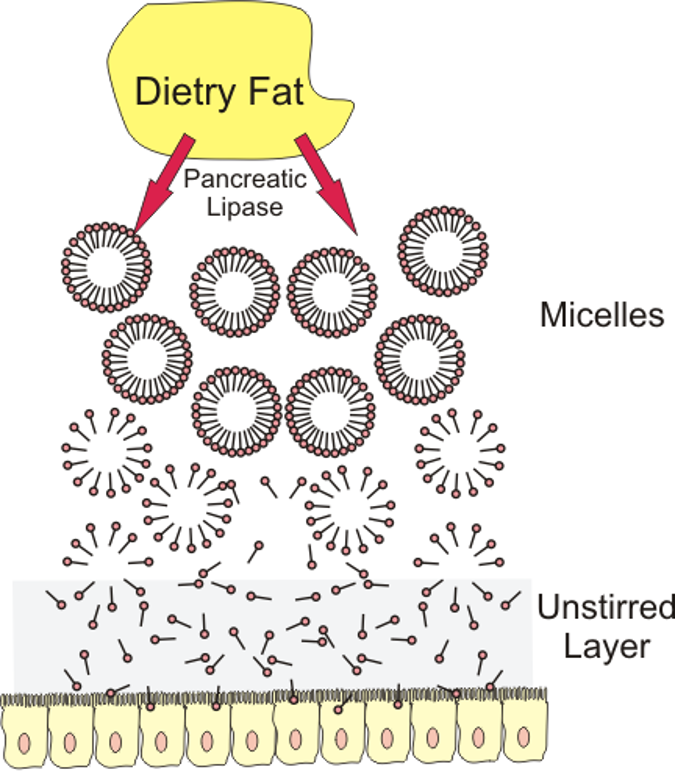
Absorption of Lipids Glycerol, short and medium-chain fatty acids (chain lengths less than 14 carbons) are directly absorbed from the intestinal lumen into the portal vein and taken to the liver for further utilization. Long-chain fatty acids, free cholesterol, and β- acyl glycerol and bile salts form mixed micelles. Micelles Micelles are disk-shaped clusters of

Lipid absorption simplified Read More »

Impaired TCA cycle enzyme activity

A postoperative patient on intravenous fluids develops lesions in the mouth (angular stomatitis). Urinalysis indicates an excretion of 15 μg riboflavin/mg creatinine, which is abnormally low. Which of the following TCA cycle enzymes is most likely to be affected? Citrate synthase Isocitrate dehydrogenase Fumarase Malate dehydrogenase Succinate dehydrogenase Details- E) – Succinate dehydrogenase is the

Impaired TCA cycle enzyme activity Read More »

Impaired TCA cycle enzyme activity in angular stomatitis

A postoperative patient on intravenous fluids develops lesions in the mouth (angular stomatitis). Urinalysis indicates an excretion of 15 μg riboflavin/mg creatinine, which is abnormally low. Which of the following TCA cycle enzymes is most likely to be affected? Citrate synthase Isocitrate dehydrogenase Fumarase Malate dehydrogenase Succinate dehydrogenase Details- E) – Succinate dehydrogenase is the

Impaired TCA cycle enzyme activity in angular stomatitis Read More »

Digestion of lipids

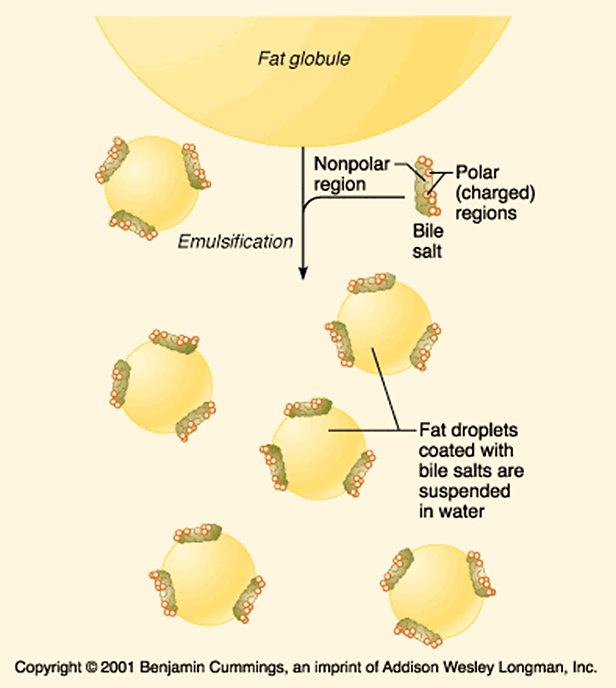
Introduction Lipids are a heterogeneous group of water-insoluble organic molecules that can be extracted from tissues by non-polar solvents. They are the major source of energy for the body. Dietary fat Composition More than 95% are triglycerides, the other are -Cholesteryl esters, phospholipids, and unesterified fatty acids. Dietary sources of Lipids a) Animal Sources Dairy

Digestion of lipids Read More »

Summary- Regulation of Major Pathways Of Carbohydrate metabolism

Enzyme Pathway Effect of Substrate Concentration Allosteric Modification/ Feedback Inhibition Induction/Repression Clinical Significance Hexokinase Glycolysis Feedback inhibition by Glucose-6-P – Deficiency causes Hemolytic anemia. Glucokinase Glycolysis Stimulated by a high carbohydrate diet   Activity decreases during fasting – Induced by Insulin Repressed by Glucagon Activity low in Diabetes Mellitus Phosphofructokinase-1 Glycolysis Stimulated by a high

Summary- Regulation of Major Pathways Of Carbohydrate metabolism Read More »

×