
USMLE Content

Biosynthesis of cholesterol- a quick revision

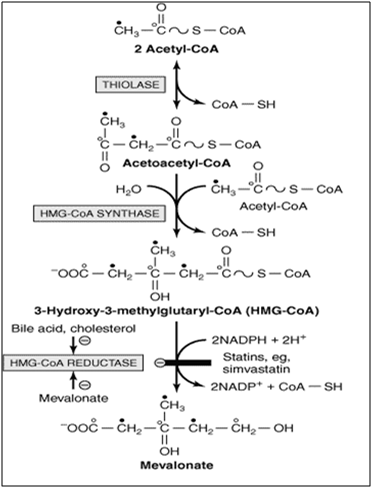
Biosynthesis of cholesterol The biosynthesis of cholesterol may be divided into five steps: (1) Synthesis of Mevalonate from acetyl-CoA. (2) Formation of Isoprenoid units from Mevalonate by loss of CO2. (3) Condensation of six isoprenoid units forms Squalene. (4) The cyclization of Squalene gives rise to the parent steroid, Lanosterol. (5)Formation of cholesterol from lanosterol.

Biosynthesis of cholesterol- a quick revision Read More »
Starvation induced metabolic alterations

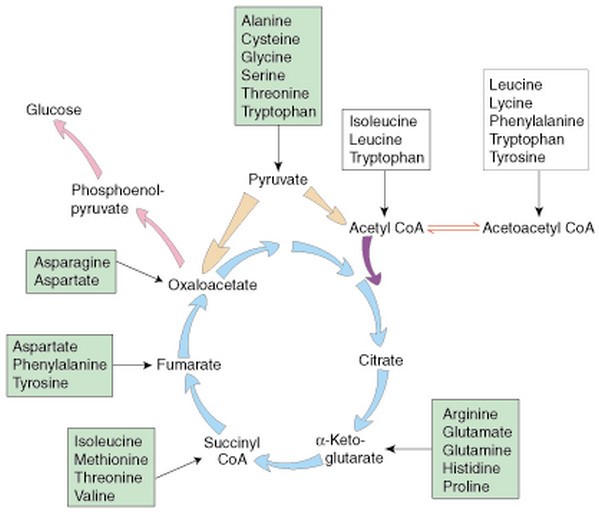
 A 23 –year- old female was brought for consultation by her mother, who was troubled by her daughter’s continuous fatigue, dizziness, and loss of weight. The patient was 6 feet 2 inches tall and weighed 100 pounds. Further questioning revealed that the young woman had been virtually fasting for four months, hoping to obtain a

Starvation induced metabolic alterations Read More »
Question of the week

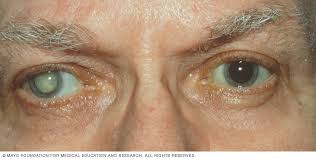
Case details A 54- year-old man with Type 1 diabetes is referred to an ophthalmologist for evaluation of developing cataracts. Blood chemistry results are shown below: Fasting blood glucose   198 mg/dl Hemoglobin A                  15 gm/dl Hemoglobin A1c             10% of total Hb Urine ketones                   Positive Urine glucose                    Positive Which of the following enzymes is most strongly

Question of the week Read More »

Molecular Biology- Viva Questions- Set -1

1-State Chargaff’s rule In DNA molecules, the concentration of deoxyadenosine (A) nucleotides equals that of thymidine (T) nucleotides (A = T), while the concentration of deoxyguanosine (G) nucleotides equals that of deoxycytidine (C) nucleotides (G = C). 2- What is meant by hyperchromicity of denaturation?  The conjugated double bonds of purine and pyrimidine derivatives absorb

Molecular Biology- Viva Questions- Set -1 Read More »

Utilization of ketone bodies and ketosis- lecture 3

Utilization of ketone bodies The ketone bodies are water-soluble and are transported across the inner mitochondrial membrane as well as across the blood-brain barrier and cell membranes. Thus, they can be used as a fuel source by a variety of tissues, including the CNS. They are preferred substrates for aerobic muscle and heart, thus sparing

Utilization of ketone bodies and ketosis- lecture 3 Read More »

ATP- The energy currency within the cell

Q.- Adenosine triphosphate (ATP) is the energy currency within the cell. Which of the following best describes the type of compound ATP is? A. Phospholipid B. Amino acid C. Nucleotide D. Triacylglycerol E. Oligosaccharide. Details The correct answer is -C- Nucleotide. The nucleotide coenzyme adenosine triphosphate (ATP) is the most important form of chemical energy

ATP- The energy currency within the cell Read More »

×