USMLE Content

Alcohol Induced Metabolic Changes- A Case Study

Case details A 65-year-old man was admitted to the emergency department in an unconscious state. Apparently, he had become increasingly depressed after the death of his younger son two months ago. Previously, before his death, he had been a moderate drinker, but consumption of alcohol had increased markedly over the last few weeks. He had

Alcohol Induced Metabolic Changes- A Case Study Read More »

Minor pathways of oxidation of fatty acids- Lecture-2 (omega and peroxisomal oxidation)

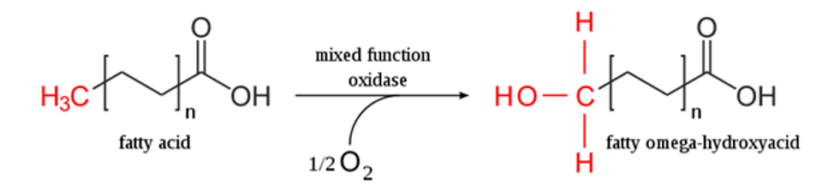
Omega oxidation of fatty acids Another minor pathway for fatty acid oxidation also involves hydroxylation and occurs in the endoplasmic reticulum of many tissues. In this case, hydroxylation takes place on the methyl carbon at the other end of the molecule from the carboxyl group or on the carbon next to the methyl end. It

Minor pathways of oxidation of fatty acids- Lecture-2 (omega and peroxisomal oxidation) Read More »

Elevated Acyl carnitine compounds and associated hypoglycemia- What is the defect?

Case details  A 5- year-old boy suffered gastroenteritis for two days and was brought to the emergency in a semiconscious state. Blood glucose at the time of admission was 45 mg/dl and his urine was negative for glucose and ketone bodies. Glucose was administered intravenously, and his condition improved within 10 minutes. Subsequent laboratory investigations

Elevated Acyl carnitine compounds and associated hypoglycemia- What is the defect? Read More »

Question the week-2 (Answer)

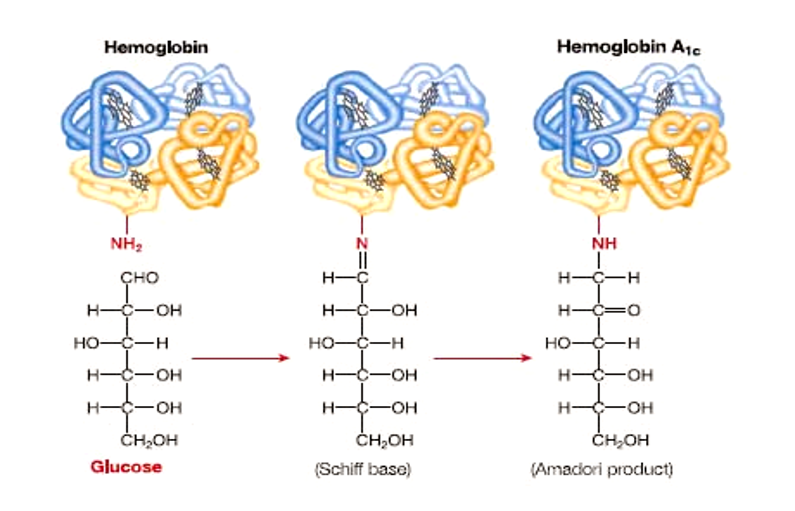
A 65-year-old man with a history of type 2 diabetes mellitus is complaining of blurred vision and numbness in his toes. Laboratory results are significant for an increased BUN and creatinine, indicative of renal failure, and high HbA1c, indicative of chronic persistent hyperglycemia. Of the several proposed mechanisms, one mechanism responsible for hyperglycemia-induced complications in

Question the week-2 (Answer) Read More »

Summary- Regulation of Major Pathways Of Carbohydrate metabolism

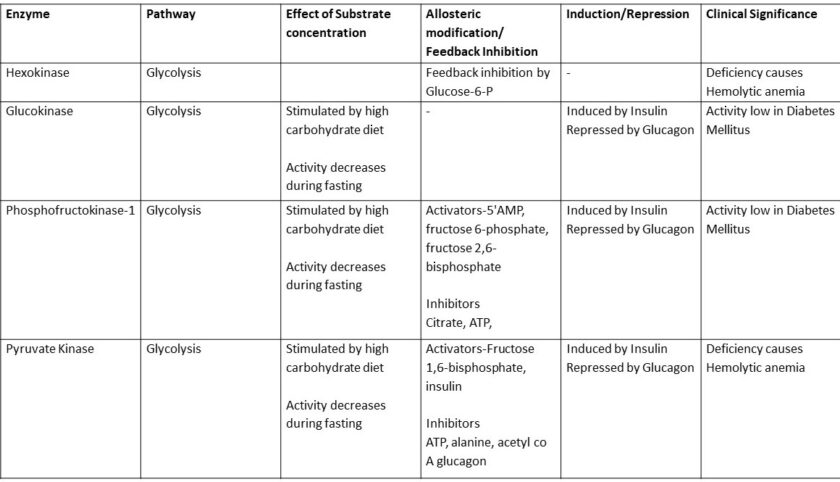
Enzyme Pathway Effect of Substrate Concentration Allosteric Modification/ Feedback Inhibition Induction/Repression Clinical Significance Hexokinase Glycolysis Feedback inhibition by Glucose-6-P – Deficiency causes Hemolytic anemia. Glucokinase Glycolysis Stimulated by a high carbohydrate diet   Activity decreases during fasting – Induced by Insulin Repressed by Glucagon Activity low in Diabetes Mellitus Phosphofructokinase-1 Glycolysis Stimulated by a high

Summary- Regulation of Major Pathways Of Carbohydrate metabolism Read More »

Hypoglycemia Due To Biotin deficiency

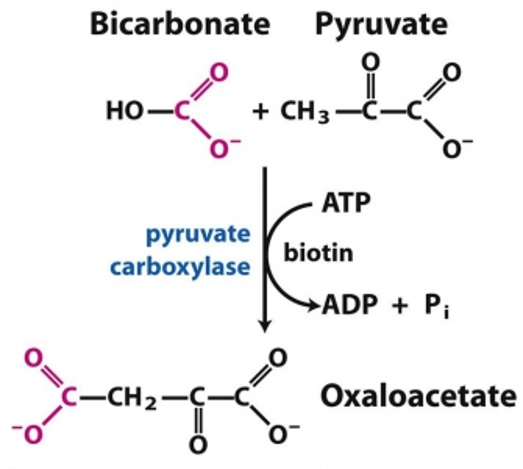
A 32-year-old bodybuilder has decided to go on a diet consisting of egg whites to ensure only proteins for muscle growth. After a few weeks, he experiences decreased energy and is found to be hypoglycemic. A nutritionist tells the patient that he most likely has a deficiency of vitamin Biotin. Which of the following enzymes

Hypoglycemia Due To Biotin deficiency Read More »

Translation- an overview

The pathway of protein synthesis is called Translation because the ‘language’ of the nucleotide sequence on the mRNA is translated into the language of the amino acid sequence. The m RNA is translated from its 5’end to its 3’end, producing a protein synthesized from its amino-terminal end to its carboxyl-terminal end. Prokaryotic Translation  Components required

Translation- an overview Read More »

Regulation Of Gene Expression in Eukaryotes

Gene regulation is significantly more complex in eukaryotes than in prokaryotes for a number of reasons- 1)  Large Genome First, the genome being regulated is significantly larger. The E. coli genome consists of a single, circular chromosome containing 4.6 Mb. This genome encodes approximately 2000 proteins. In comparison, the genome within a human cell contains 23 pairs

Regulation Of Gene Expression in Eukaryotes Read More »

Lac operon (Regulation of gene expression in prokaryotes)- lecture-2

Prokaryotes must use substances and synthesize macromolecules just fast enough to meet their needs. The genes for metabolizing enzymes are expressed only in the presence of nutrients.  If the enzymes are not needed, genes are turned off. This allows for the conservation of cell resources. Controlling gene expression is one method of regulating metabolism. Bacteria

Lac operon (Regulation of gene expression in prokaryotes)- lecture-2 Read More »

×